
Introduction
The global demand for dehydrated garlic has grown steadily over the past decade due to its extended shelf life, convenience, consistent flavor, and broad application in food processing industries. Dehydrated garlic products, including flakes, powder, and granules, are essential ingredients in spices, seasonings, ready-to-eat meals, sauces, and savory snacks.
As a leading international agro product supplier, Real Extreme Export specializes in sourcing and exporting high-quality dehydrated garlic products to markets around the world. This in-depth article provides insights into the dehydrated garlic export landscape, top exporting countries, quality standards, market trends, and frequently asked questions that buyers and exporters commonly encounter.
What is Dehydrated Garlic?
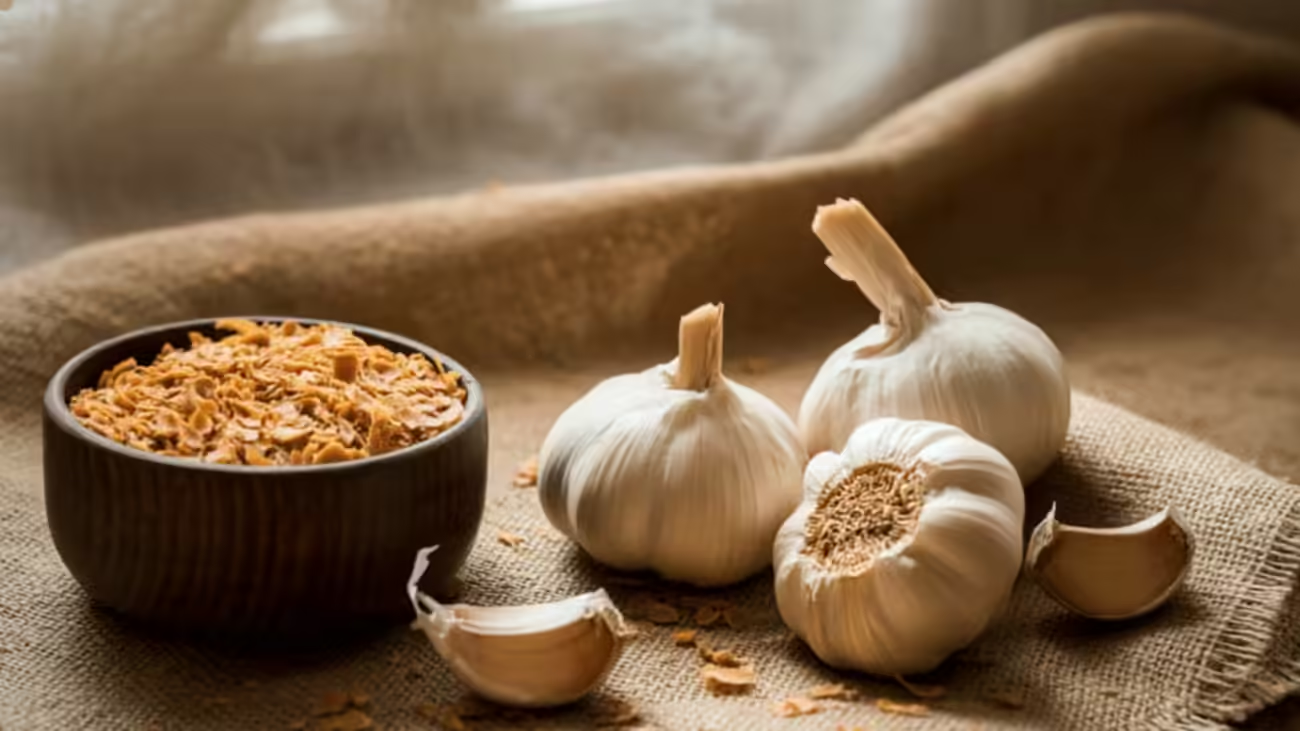
Dehydrated garlic is fresh garlic that has undergone a drying process to remove moisture while preserving its flavor and nutritional properties. The dehydration process significantly extends the product’s shelf life and makes it more convenient for industrial use compared to fresh garlic. The most common forms of dehydrated garlic include:
- Garlic Powder – finely ground dried garlic
- Garlic Granules – medium-textured dried pieces
- Garlic Flakes – larger dried slices
These products are prized around the world for their consistent quality, ease of storage, and ease of use in food formulation.
The Global Market for Dehydrated Garlic
The global dehydrated garlic market is forecasted to grow due to increasing demand from the food processing, culinary, and food service industries. The rise in convenience food consumption and multicultural food preferences has boosted usage of spices and seasonings, including dehydrated garlic products. Markets in North America, Europe, Asia, and the Middle East continue to show strong demand for premium dehydrated garlic that meets strict quality and safety standards.
Major Players in Dehydrated Garlic Exports
Several countries are recognized as leading exporters of dehydrated garlic. These exporters benefit from favorable agricultural conditions, modern processing plants, and established trade relationships with major importing nations. The table below highlights key dehydrated garlic exporters, their strengths, and common export products:
| Country/Region | Key Export Strength | Typical Export Forms |
| China | Largest producer and exporter with competitive prices and high volumes | Garlic powder, granules, and flakes |
| India | Growing exporter; increasing capacity for dehydrated garlic | Powder and flakes |
| Egypt | Quality garlic production with expanding processing infrastructure | Powder and granules |
| Argentina | Seasonally strong production; popular in Latin America and Europe | Garlic flakes and powder |
| Spain | Established dehydrated garlic supply chain to Europe | Powder and granules |
Quality Standards for Export
For dehydrated garlic exporters, adherence to international quality standards and food safety protocols is essential. Importers typically require products that meet specific criteria related to:
- Moisture Content: Optimal moisture ensures shelf stability and prevents microbial growth.
- Color and Aroma: Consistent color and natural garlic aroma are key quality markers.
- Particle Size: Depending on the export product (flakes, granules, or powder), particle size specifications are defined.
- Purity: High purity with low ash content and minimal foreign matter.
- Certifications: Certificates like HACCP, ISO 22000, and food safety compliance documentation are often required.
Therefore, Real Extreme Export actively tests and verifies all dehydrated garlic products under recognized quality assurance programs, ensuring they consistently meet the regulatory requirements of destination countries.
Processing Techniques
The quality of dehydrated garlic products largely depends on the processing techniques used. Dehydration usually involves controlled heat and airflow to remove moisture while preserving volatile compounds that give garlic its characteristic flavor. The common dehydration methods include:
- Air Drying: Traditional yet cost-effective method for producing garlic flakes.
- Spray Drying: Commonly used to produce garlic powder with consistent particle size.
- Freeze Drying: High-quality method that maximizes flavor retention but is more costly.
Each method has different advantages in terms of product characteristics, shelf life, and cost.
Export Logistics and Packaging
Efficient logistics and appropriate packaging are critical for maintaining product integrity during storage and transit. Typical packaging options offered by dehydrated garlic exporters like Real Extreme Export include:
- Retail-Ready Packaging: Small sacks or sealed pouches for retail distribution.
- Bulk Packaging: Larger sacks, drums, or fiberboard containers for commercial buyers and food processors.
- Food-Grade Inner Liners: Used to ensure hygiene and reduce moisture absorption.
Logistics planning also includes temperature control (if necessary), documentation for customs clearance, and coordination with shipping partners for timely delivery.
Why Choose Real Extreme Export as Your Dehydrated Garlic Supplier
As a reputable international supplier of agro products, Real Extreme Export has developed a strong reputation among global buyers for the following reasons:
- Consistent Quality: All products meet stringent quality parameters and are backed by certificates.
- Competitive Pricing: Access to large volumes and efficient supply chain enables cost-effective pricing.
- Global Reach: Experience exporting to Europe, Middle East, Africa, and Asia.
- Customer Support: Dedicated team ensures clarity on specifications, certifications, and shipping schedules.
Real Extreme Export’s focus on quality and service ensures that international buyers receive dehydrated garlic products that meet their specific requirements.
Market Trends and Opportunities
- Increasing Demand in Processed Foods
The rapid expansion of the processed food sector is one of the primary drivers for dehydrated garlic demand. Products such as soups, sauces, ready meals, and seasoning blends frequently use dehydrated garlic for flavor and convenience. - Growth in Health Conscious Markets
Consumers increasingly favor natural ingredients with health benefits. - Shift Toward Sustainable Packaging
Buyers are seeking suppliers who offer environmentally friendly packaging solutions such as recyclable materials and reduced plastic use. Dehydrated garlic exporters that adapt to these demands gain a competitive edge.
Common Applications of Dehydrated Garlic
Dehydrated garlic plays a vital role across multiple industries. First, food processors rely on it for consistent flavor and longer shelf life. In addition, restaurants and catering businesses prefer dehydrated garlic for its convenience and easy storage. Moreover, retail brands use it in packaged seasonings and spice blends. Finally, pharmaceutical and nutraceutical industries incorporate dehydrated garlic into herbal and health-focused formulations.
- Food Processing: Seasonings for snacks, sauces, soups, and meal kits.
- Restaurant and Catering: Bulk spices for commercial kitchens.
- Retail: Packaged garlic seasonings for household use.
- Pharmaceutical & Nutraceuticals: Ingredient in herbal formulations.
Dehydrated Garlic Product Forms and Uses
| Product Form | Primary Use | Target Market |
| Garlic Powder | Seasoning blends, sauces | Food processors, food service |
| Garlic Granules | Snack coatings, dry mixes | Industrial kitchens, manufacturers |
| Garlic Flakes | Instant cooking, rehydration | Retail, bulk food buyers |
| Garlic Minced | Ready use in recipes | Restaurants, packaged foods |
FAQs About Dehydrated Garlic Exporting
Dehydrated garlic refers to fresh garlic that has been dried to remove its moisture content, resulting in flakes, granules, or powder suitable for longer storage and industrial use.
Dehydrated garlic offers extended shelf life, easier inventory management, consistency in flavor, and cost efficiency compared with fresh garlic.
Major dehydrated garlic exporters include China, India, Egypt, Argentina, and Spain. These countries have large garlic crops and established processing industries.
Export quality dehydrated garlic should meet strict moisture limits, consistent aroma and color, low ash content, and be accompanied by relevant food safety certifications.
Garlic powder is finely ground, while garlic granules are coarser. The choice depends on product application and buyer requirements.
Store in cool, dry conditions away from direct sunlight. Proper packaging and humidity control are essential to prevent flavor degradation.
Conclusion
The global dehydrated garlic export market continues to grow as food industries and consumers seek high-quality processed ingredients that offer convenience and consistent flavor. For international buyers and food manufacturers, choosing a reliable dehydrated garlic exporter is crucial to ensure product quality, supply stability, and compliance with food safety standards.
Real Extreme Export stands as a trusted partner in this space, leveraging deep experience in international agro exports to offer premium dehydrated garlic products to clients around the world. With strict quality adherence, tailored packaging options, and efficient logistics, Real Extreme Export continues to support global demand for dehydrated garlic in 2025 and beyond.